
Last verified: April 2026
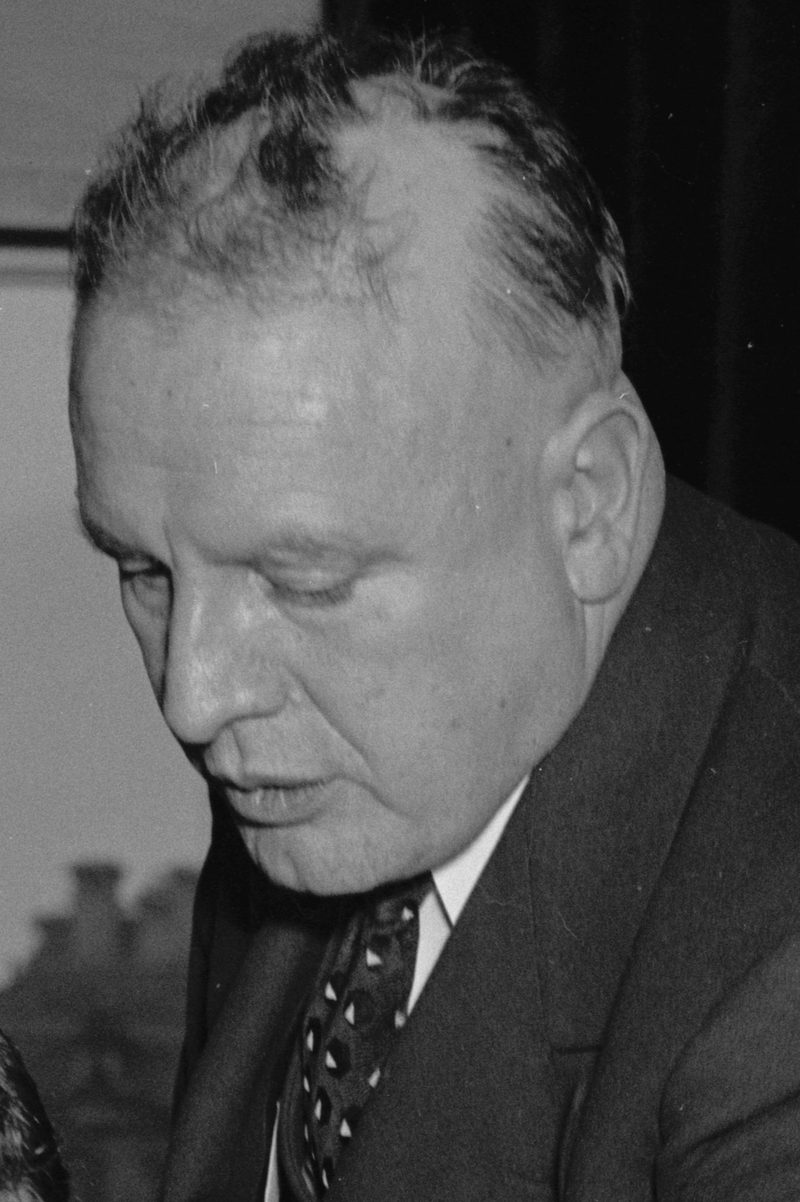
Anslinger
Harry Jacob Anslinger (1892–1975) became the first commissioner of the newly created Federal Bureau of Narcotics in 1930. The bureau, an outgrowth of the prohibition-era Treasury Department's enforcement of the Harrison Narcotic Act (1914), assumed responsibility for federal narcotics enforcement just as alcohol prohibition was nearing its end and as cannabis was beginning to enter the federal regulatory crosshairs.
Anslinger served as commissioner for 32 years (1930–1962), the longest tenure of any modern federal-agency head. He shaped American drug policy more decisively than any other single figure of the 20th century, and his policy framework — Schedule I classification of cannabis, federal-state-local enforcement coordination, international treaty obligations — survives in modified form to the present day.
The Anti-Cannabis Pivot
Anslinger had not initially focused on cannabis. The Federal Bureau of Narcotics' early years (1930–1934) emphasized opioids and cocaine, the substances covered by the Harrison Narcotic Act. Cannabis was largely state-regulated; many states had no cannabis statute at all.
The pivot to cannabis came in 1935–1937. Several factors drove it:
- The end of alcohol prohibition (1933) had reduced the political-utility of large federal-narcotics-enforcement budgets; Anslinger needed a new prohibition rationale
- Mexican migration into the U.S. Southwest in the 1920s had brought cannabis use as a culturally normalized practice into communities where it was framed as foreign and dangerous
- The Black-musician cannabis culture that had developed in New Orleans, Chicago, and Harlem provided politically useful imagery
- The Hearst newspaper chain ran sensational anti-cannabis coverage that aligned with Anslinger's emerging policy focus
By 1937, Anslinger had built sufficient congressional and public support to push the Marijuana Tax Act through Congress. The act, while technically a tax measure (taxing cannabis at prohibitive rates and requiring registration that effectively criminalized possession), was the federal cannabis-prohibition foundation.
The New Orleans Material
Anslinger relied heavily on New Orleans-derived material in building the case for cannabis prohibition. Several documented sources:
The "Gore Files"
Anslinger maintained a private file of "horror stories" — cases where cannabis use was alleged to have caused violent or aberrant behavior. These cases came from city police departments and were aggregated for use in congressional testimony, press materials, and public speaking. New Orleans contributed several cases, including:
- Cases of cannabis use among musicians and "negroes" in the Storyville and back-of-town environment
- Allegations of "marijuana-fueled" violence in the city's underworld during prohibition-era and post-prohibition gambling and brothel operations
- Reported cannabis-related cases involving Mexican immigrants in the New Orleans Latino community
Modern historians have shown that many "Gore Files" cases were embellished, fabricated, or based on cannabis-tangential incidents miscategorized as cannabis-caused. The aggregate effect, however, was a body of allegedly documentary evidence that shaped congressional perception of cannabis as a public-safety threat.
The Hearst New Orleans Press Coverage
The New Orleans Item and other newspapers (some Hearst-owned, some independent) published a series of sensational articles in 1934–1937 framing cannabis use in the city as a crisis. Articles emphasized:
- Cannabis distribution among Black musicians in Storyville's afterlife
- Mexican-immigrant cannabis use in the produce-market and dock-worker communities
- "Marijuana parties" allegedly held at private homes, jazz clubs, and brothels
- Crimes — assaults, prostitution, theft — purportedly traced to cannabis use
This press coverage was both a source for and a product of Anslinger's propaganda framework. The press articles fed Anslinger's testimony; Anslinger's testimony in turn justified more press coverage.
The 1937 Congressional Testimony
In Anslinger's congressional testimony for the Marijuana Tax Act in spring 1937, he made multiple references to New Orleans-derived material. Key elements:
- Cannabis use among musicians and "negroes" was framed as a violent and dangerous practice
- Specific New Orleans cases were cited (some from the Gore Files) as evidence of cannabis-caused violence
- The geographical spread from New Orleans north and west was framed as a contagion model
- Mexican-immigrant cannabis use was described as part of a broader "Mexican menace"
The testimony was racialized in ways that read overtly as racist by modern standards. Anslinger's quoted statements include:
- "There are 100,000 total marijuana smokers in the U.S., and most are Negroes, Hispanics, Filipinos, and entertainers. Their satanic music, jazz, and swing, result from marijuana use."
- "Marijuana causes white women to seek sexual relations with Negroes, entertainers, and others."
- "Reefer makes darkies think they're as good as white men."
(These quotes are widely attributed to Anslinger in primary sources and are well-documented in 20th-century drug-policy historiography. Specific phrasings vary by source; the racist framing of his testimony is uncontested.)
The Targeting of Black Musicians
Anslinger maintained explicit lists of jazz musicians he intended to target for surveillance and prosecution. Louis Armstrong, Duke Ellington, Cab Calloway, Billie Holiday, Charlie Parker, Thelonious Monk, Dizzy Gillespie, and many others were named in Anslinger's correspondence and in FBN files.
The targeting of Billie Holiday is particularly well-documented (Johann Hari's Chasing the Scream and Julia Blackburn's With Billie compile the FBN's surveillance and harassment of Holiday over decades). Holiday's 1947 narcotics arrest, her loss of her cabaret card, her difficulty maintaining performance opportunities in the late 1940s and 1950s, and her death in 1959 while under arrest at a New York hospital — these are linked to Anslinger's bureau's sustained targeting.
Armstrong was arrested for cannabis possession in November 1930 in Los Angeles (see Armstrong & "Muggles"). The arrest was a high-profile event Anslinger's bureau used in subsequent propaganda. New Orleans-area musicians were among those Anslinger sought to make examples of throughout the 1930s and 1940s.
The Disproportionate Impact on New Orleans Black Communities
The Anslinger framework's downstream effects in New Orleans were substantial. Federal-prohibition enforcement layered with state-level Louisiana statutes and city-level NOPD policing produced sharply disparate cannabis-arrest rates in Black neighborhoods (Storyville's afterlife in Tremé, the back-of-town, the Lower Ninth, and parts of the Sixth Ward) compared to white neighborhoods. Pre-2010 arrest data — analyzed in ACLU and Vera Institute reports — showed roughly 7-to-1 Black-to-white arrest disparity for marijuana possession in New Orleans, contributing materially to mass-incarceration outcomes that have shaped city demographics for generations.
The 2010, 2016, and 2020 amendments to §54-507, and the 2021 DA Williams declination, can be read as a partial reversal of the Anslinger-era policy framework — a reduction in the extent to which the city participates in the federal-prohibition enforcement apparatus that Anslinger built.
The Federal Persistence
Anslinger's federal apparatus, however, persists. The 1937 Marijuana Tax Act was struck down on Fifth Amendment grounds in 1969 (Leary v. United States) — but Congress passed the Controlled Substances Act the following year (1970), which placed cannabis on Schedule I and continues to govern federal drug policy. Cannabis remains federally illegal in 2026, even as a majority of states have legalized it for medical or adult use. The federal-state conflict that defines U.S. cannabis policy is the direct product of Anslinger's framework.
Anslinger's Legacy
Anslinger left federal service in 1962, replaced by Henry Giordano. He continued advisory and writing work until his death in 1975. He outlived several of the musicians he had targeted; he did not live to see California's 1996 medical-cannabis program, the 2012 Colorado and Washington adult-use legalizations, or the 2018 Farm Bill's hemp legalization.
Modern drug-policy historiography is largely critical of Anslinger. The racial framing of his testimony, the "Gore Files" embellishments, the Billie Holiday targeting, and the broader propaganda apparatus that shaped federal cannabis policy for 80 years are now understood as documentation of one of the most consequential and racially poisonous federal policy frameworks of the 20th century. New Orleans's role in providing source material for that framework is part of the historical record that contemporary cannabis-reform discussions in the city now actively engage.
For in-depth cannabis education, dosing guides, safety information, and research summaries, visit our partner site TryCannabis.org