Last verified: April 2026
The Bourbon Street Paradox
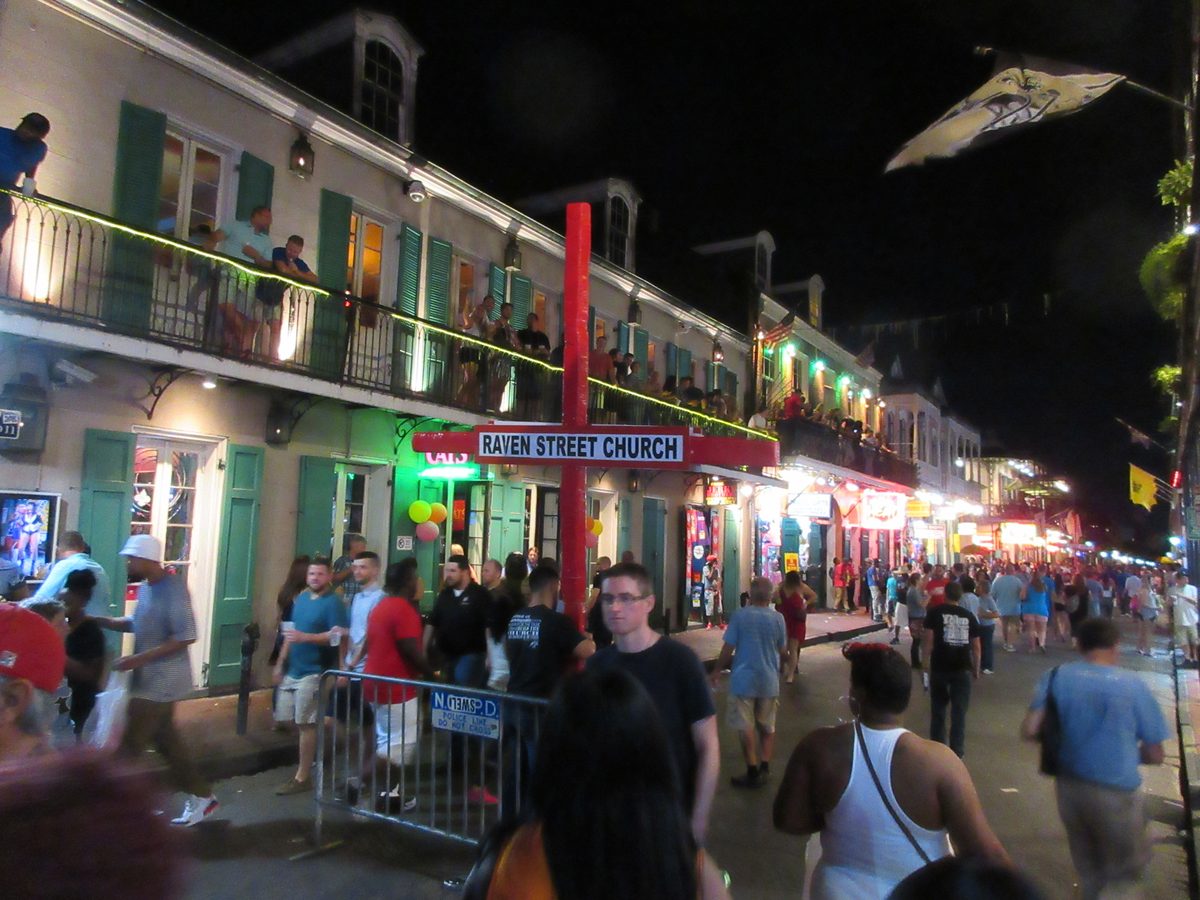
Bourbon Street is the seven-block pedestrian-friendly stretch of the French Quarter from Canal Street to Esplanade Avenue, lined with bars, daiquiri shops, jazz clubs, and souvenir vendors. It is the most-policed and most-photographed street in New Orleans. It is also the most visible expression of New Orleans's open-container alcohol exception, which permits patrons to leave bars carrying drinks in disposable plastic cups and drink them while walking down the public street.
Visitors from elsewhere in the U.S. — where open-container is universally prohibited — see Bourbon Street and reasonably conclude that New Orleans is operating under unusually permissive substance rules. For alcohol, this is true. For cannabis, it is not.
Why Alcohol Open-Container Is Permitted
The New Orleans Code of Ordinances, primarily §54-405 ("Drinking and consumption of alcoholic beverages on public ways"), permits public consumption of alcoholic beverages in plastic, paper, or other unbreakable containers. The rule is enforced through the prohibition on glass on the street, not through a prohibition on the drinking itself. Bars on Bourbon Street routinely transfer drinks from glass to plastic at the door (the "go-cup") to comply.
This rule is a centuries-old New Orleans particularity tied to the city's continuous Catholic-Mediterranean drinking culture, the Spanish and French colonial inheritance, and the city's working-port/trade economy. It survived Prohibition (which Louisiana enforced unevenly), it survived modern open-container reform that swept through other states in the 1970s–1990s under MADD pressure, and it survived federal highway-funding pressure that cleaned up open-container laws on highways nationwide.
Why Cannabis Open-Container Is Not
No analogous statute or ordinance permits public cannabis consumption. The 2010, 2016, and 2020 amendments to §54-507 reduced the penalty for cannabis possession to a $40–$100 municipal summons. They did not legalize public consumption. Public consumption of cannabis remains prohibited under both city ordinance and state law.
State law adds another layer: HB 652 (Act 247 of 2021) reduced statewide first-offense possession of ≤14g to a $100 max fine with no jail, but it did not authorize public consumption. The DA's declination policy applies to possession, not to public-consumption violations specifically.
The Practical Consequence on Bourbon
On a typical Saturday night, the visitor experience contrasts sharply:
- Daiquiri in your hand, walking down Bourbon. No officer attention. No legal exposure. Standard tourist behavior.
- Joint in your hand, walking down Bourbon. Officer attention very likely within minutes. If observed, summons under §54-507 ($40–$100 fine, no jail), possible additional ordinance for the public consumption.
- Vape pen, hidden, occasional discreet draws. Detection rate near zero in normal Bourbon Street density. Operationally invisible.
- Edible consumed an hour earlier in your hotel room. Detection rate zero. No officer-detectable indicator.
The legal layer (technically prohibited) and the operational layer (practical detection) diverge. Most experienced visitors who consume cannabis on Bourbon Street use vape pens or edibles, not flower.
What NOPD Actually Does
NOPD's 8th District is headquartered in the Quarter and maintains continuous foot patrol on Bourbon Street with mounted officers, undercover narcotics units, and uniformed beat officers. The 8th District's posture toward cannabis after the 2020 cite-and-release mandate is:
- Custodial arrest for simple possession is disfavored. Officers are trained to issue the §54-507 summons.
- Smoking flower in plain sight is the most-cited triggering behavior. The smell, the visibility, and the public-consumption ordinance combine.
- Disorderly conduct paired with cannabis escalates outcomes. Public urination, fighting, harassment of bystanders — these get you booked, with cannabis added.
- Distribution-quantity packaging or cash-and-product evidence is treated as state-law trafficking, not §54-507. The DA's office still declines simple possession but does not decline trafficking.
Bourbon Street and Federal Officers
The U.S. Park Service (Jean Lafitte National Historical Park has Quarter sites), DEA, ATF, and FBI all have New Orleans field offices. Federal officers in plain clothes are present in the Quarter, though their cannabis-enforcement priority is essentially zero for personal-use possession. Federal-level cannabis enforcement focuses on distribution, interstate trafficking, and cannabis adjacent to other federal-priority crimes (firearms trafficking, public corruption).
The Side Streets — Where Posture Loosens
Bourbon Street is the highest-density officer presence in the Quarter. Two blocks east on Royal Street, the posture changes — Royal is mostly antique shops, art galleries, and quieter bars; foot patrol is lighter. Two blocks east of that on Decatur Street, you are at the Mississippi riverfront, near the French Market, and lighter still. Cross Esplanade Avenue and you are in Faubourg Marigny, where the operational cannabis posture loosens markedly.
Frenchmen Street, parallel to Decatur but in Marigny, is where locals and many experienced visitors actually go for live music — and where cannabis is operationally normalized in the way Bourbon Street is for alcohol.
Why This Matters Beyond Tourism
The Bourbon Street alcohol-versus-cannabis double standard is a microcosm of American policy contradictions: a substance that kills approximately 95,000 Americans per year (alcohol, per CDC alcohol-attributable mortality estimates) is permitted open-container on a public street, while a substance with no documented direct-toxicity mortality on record (cannabis) is prohibited. This contradiction, which the New Orleans City Council partially addressed with the 2010, 2016, and 2020 amendments to §54-507 and the DA partially addressed with the 2021 declination policy, is one of the more visible legal contradictions in U.S. drug policy.
For in-depth cannabis education, dosing guides, safety information, and research summaries, visit our partner site TryCannabis.org