
Last verified: April 2026
The Recording
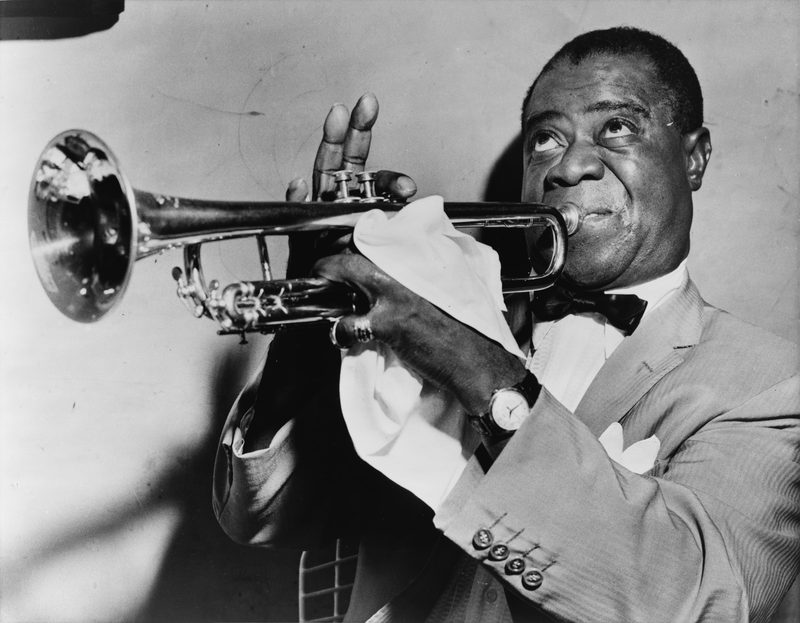
On December 7, 1928, Louis Armstrong and his band recorded "Muggles" at the OKeh Records studios in Chicago. The personnel:
- Louis Armstrong — cornet
- Fred Robinson — trombone
- Jimmy Strong — clarinet
- Earl Hines — piano
- Mancy Cara — banjo
- Zutty Singleton — drums
This was the recording lineup sometimes called "Louis Armstrong and his Savoy Ballroom Five" or referenced as part of the "Hot Five" recording sessions, though personnel varied across the broader OKeh recording project. The 1928 sessions, particularly the December dates, produced "Muggles," "Tight Like This," "St. James Infirmary," and "Weather Bird" — among the most-studied recordings in early jazz history.
The Title — "Muggles"
"Muggles" was period slang for cannabis. The word entered American vernacular through Black New Orleans musicians' usage in the 1910s and 1920s, derived from Caribbean and possibly Mexican Spanish-influenced port-trade vocabulary, though the precise etymology is uncertain. By the time Armstrong recorded the track in 1928, "muggles" was working-musician slang in the Black jazz milieu in Chicago, Harlem, and NOLA — meaning specifically cannabis.
The naming was deliberate. Armstrong's letters and interviews throughout his life make explicit and unambiguous reference to his cannabis use, which began in the early 1920s shortly after he moved from New Orleans to Chicago. He described cannabis as "the gage" or "the muggles" or "tea" interchangeably with various other contemporary slang.
The Music
The recording itself is approximately 3 minutes long. The structure:
- An opening section in slow, blues-tempo, with the rhythm section (Hines, Cara, Singleton) supporting an extended melodic line by Armstrong
- A tempo shift midway, with Hines's piano taking a more prominent role
- A final section in faster tempo, with collective improvisation and Armstrong's signature high-register cornet
The recording is widely regarded as one of the finest extant examples of late-1920s small-group hot jazz. The interplay between Armstrong's cornet and Earl Hines's piano on this and other 1928 dates established a template for jazz musical conversation that would shape every subsequent jazz era. Modern listeners can find the recording on virtually any Louis Armstrong "Hot Five and Hot Seven" or "Complete Hot Five & Hot Seven" compilation.
The Cultural-Legal Moment
December 1928 is a particularly significant moment for the cultural-legal context of the recording. Cannabis was:
- Federally unregulated at the time. The 1937 Marijuana Tax Act was nine years away. The Federal Bureau of Narcotics under Harry Anslinger would not begin its anti-cannabis campaign in earnest until the early 1930s.
- Increasingly regulated at the state level. Louisiana had begun prosecuting cannabis under various state statutes, but the federal cliff was not yet imminent. Many states still had no cannabis-specific statutes.
- Operationally normalized in working-musician culture. Cannabis was openly discussed in musicians' correspondence, performed about in song lyrics ("If You're a Viper" would come a few years later), and used backstage at major venues.
For Armstrong to record a track named "Muggles" was therefore not transgressive in 1928 — it was simply a description of part of the cultural environment. The transgressive framing of cannabis use in popular discourse came later, with Anslinger's propaganda campaign and the 1937 Tax Act. Listening to the recording now requires understanding it as a document of a moment before the federal prohibition era reshaped the cultural and legal status of cannabis.
Armstrong's Cannabis Use
Louis Armstrong was a lifelong cannabis user. By his own account in letters and interviews, he began smoking cannabis in the early 1920s and continued until shortly before his death in 1971. He defended cannabis use in print and private letters across decades, often comparing it favorably to alcohol (which he also consumed) and contrasting it with what he considered more dangerous drugs.
He was arrested for cannabis possession in November 1930 in Los Angeles, while performing at the Cotton Club Café. The arrest came at the beginning of the Anslinger anti-cannabis era and was widely reported. Armstrong served roughly nine days in jail and received a six-month sentence (suspended). The arrest did not change his cannabis use; he wrote afterwards that the experience reinforced his belief that cannabis was being unjustly stigmatized.
Throughout his life, Armstrong wrote about cannabis with affection and respect:
- "It makes you feel good, man. It relaxes you, makes you forget all the bad things that happen to a Negro."
- "It was a much better thing than whiskey... a sort of medicine, a cheap drunk and with much greater thrills than could be found in liquor."
- "As we always used to say, 'gage' is more of a medicine than a dope."
These quotes — verified across multiple letters, interviews, and published memoirs — establish Armstrong's cannabis use as one of the most thoroughly documented in 20th-century American culture.
The Recording's Place in Cannabis-Cultural History
"Muggles" occupies a unique position in cannabis-cultural history:
- It is named directly and explicitly for cannabis, in a culture where the word was unambiguous to its first listeners.
- It was recorded by the most influential jazz musician of the 20th century, who was openly and lifelong a cannabis user.
- It was distributed nationally on a major commercial record label (OKeh) at a moment before federal prohibition reframed cannabis as transgressive.
- It survives intact and listenable today.
Comparable primary documents from later eras — Cab Calloway's "Reefer Man" (1932), Stuff Smith's "If You're a Viper" (1936), and many others — are explicit in their cannabis references but exist within an increasingly legally fraught environment. "Muggles" predates the federal prohibition cliff and offers a glimpse of cannabis-cultural openness that the subsequent 80 years of federal prohibition largely erased from the popular imagination.
The Anslinger Reaction
Harry Anslinger, who became commissioner of the Federal Bureau of Narcotics in 1930, made jazz musicians a central target of his anti-cannabis campaign. Armstrong was discussed by name in Anslinger's congressional testimony and in his private correspondence with FBI officials. Anslinger's campaign portrayed cannabis use among Black musicians as a moral and racial danger; the campaign drew on imagery from New Orleans, Harlem, and Chicago. (See Anslinger & Louisiana.)
The "Muggles" recording therefore became, in retrospect, a primary cultural document targeted by the Anslinger propaganda framework — a record made at a moment when cannabis was openly named in mainstream commercial culture, just before the federal prohibition apparatus made such openness commercially impossible.
Listening to "Muggles" Today
The recording is widely available on streaming services and physical compilations. The most commonly cited reissue is the Columbia/Legacy "Hot Fives and Hot Sevens" series, which collects the 1925–1929 OKeh recordings with extensive scholarly notes. Modern listeners can hear the recording with the awareness that what they are listening to is a primary document of a particular moment in American cultural history — a moment of working-musician openness about cannabis use that the subsequent federal-prohibition era foreclosed for decades.
For in-depth cannabis education, dosing guides, safety information, and research summaries, visit our partner site TryCannabis.org
Related on this site: Jazz Cannabis Slang — Muggles, Mezz Mezzrow & the Vipers, Storyville (1897–1917).