Last verified: April 2026
The Neighborhood
The French Quarter — Vieux Carré, "Old Square" — is the original colonial city laid out by the French in 1718 and rebuilt by the Spanish after fires in 1788 and 1794. It runs roughly from the Mississippi River to North Rampart Street, and from Canal Street to Esplanade Avenue: 78 square blocks, the densest concentration of historic architecture in the United States. The Spanish-built courtyards, wrought-iron balconies, and brick-and-stucco facades define the visual identity of New Orleans nationally.
The Quarter is overwhelmingly tourist-oriented today: hotels, restaurants, bars, jazz clubs, art galleries, and souvenir vendors dominate ground-floor commercial space. Residential population has shrunk steadily — fewer than 4,000 people live in the Quarter as of the most recent census, down from ~10,000 mid-20th century. Short-term rentals (Airbnb, Vrbo) plus condo conversion have absorbed the residential stock.
NOPD Posture in the Quarter
The NOPD 8th District is headquartered at 334 Royal Street and has the highest officer-density-per-square-mile of any NOPD district. Foot patrols, equestrian patrols, bicycle patrols, and standard cruiser patrols all operate continuously. Louisiana State Police also work detail assignments in the Quarter, particularly for major events.
For cannabis encounters in the Quarter:
- §54-507 cite-and-release applies. Custodial arrest for personal-use possession is rare.
- Smoking flower in plain sight on Bourbon Street is the most-cited triggering behavior. The smell, the visibility, and the public-consumption ordinance combine.
- Discreet forms (vape, edibles) are operationally undetectable in normal Quarter density.
- Combining cannabis with disorderly conduct changes outcomes — public urination, fighting, harassment of bystanders.
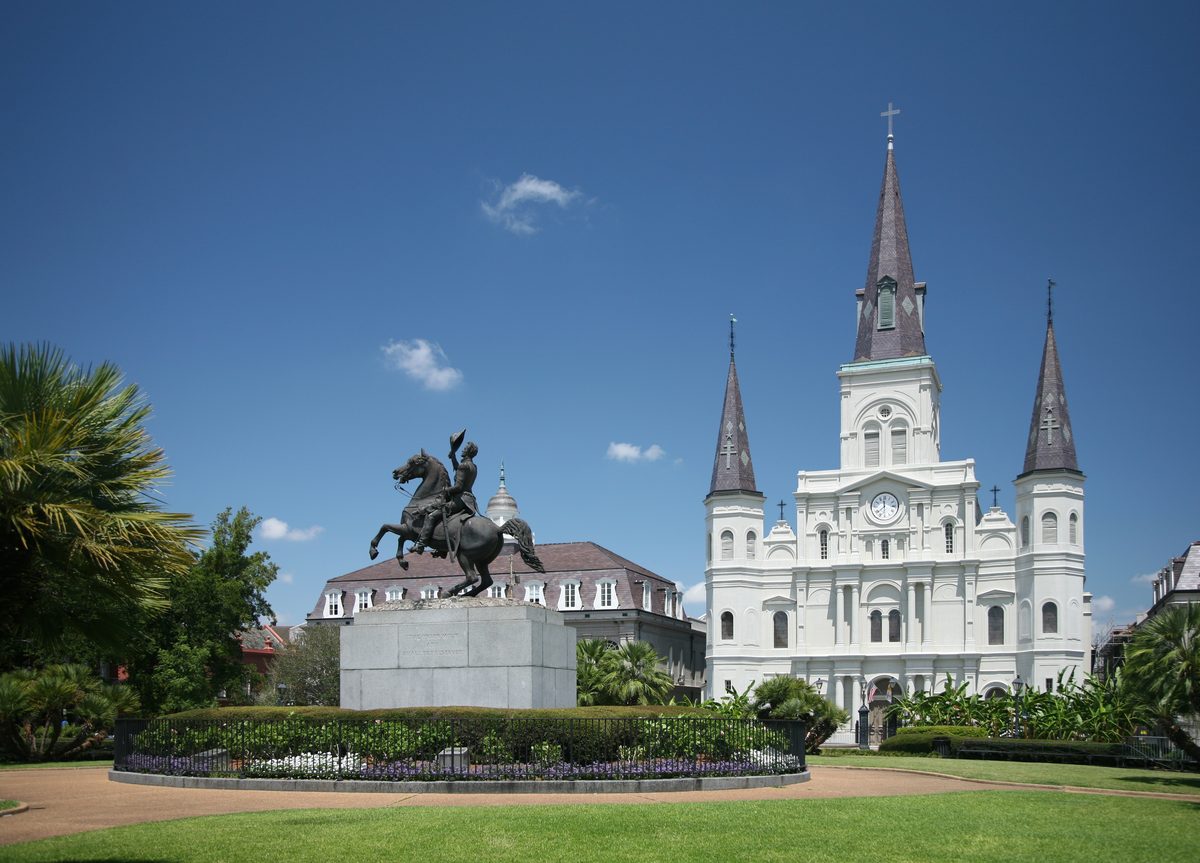
- Around historic religious sites and federal property (St. Louis Cathedral on Jackson Square, the former U.S. Mint on Esplanade) the posture tightens.
Bourbon Street — The Highest-Density Block
Bourbon Street, particularly the seven-block stretch from Canal to St. Ann, is the highest officer-density block in NOLA year-round. Mounted patrol, plainclothes, undercover narcotics, federal liaison officers, and uniformed beat officers are all routinely present. The cannabis posture is exactly as described on the Bourbon Street tourism page: alcohol open-container is permitted (§54-405), cannabis is not.
Royal Street — The Quieter Parallel
Two blocks toward the river from Bourbon, Royal Street is a different operational environment: antique shops, art galleries, fine-dining restaurants, jazz pianists in the open-air bars. Foot patrol is lighter; the noise floor is lower. Cannabis presence in normal evening rotation is the same as the rest of the Quarter, but the surveillance intensity drops materially.
Decatur Street and the Riverfront
Decatur Street runs along the river side of the Quarter from Canal to Esplanade. The lower section (toward the Mint and Marigny) is markedly looser: fewer patrol cars, fewer officers per block, more locals than tourists. The French Market starts here. The riverfront walking path along the levee is technically Coast Guard-adjacent federal property; consumption there is not advisable.
Jackson Square
The original colonial parade ground, now a small fenced park surrounded by St. Louis Cathedral, the Cabildo (former Spanish colonial seat of government), and the Presbytère. The square hosts tarot readers, painters, brass-band buskers, and the carriage rides. NOPD mounted-patrol officers circulate here continuously. Cannabis aroma on the surrounding sidewalks is common during peak hours; visible smoking on the square itself triggers officer attention quickly.
The Quarter at Night vs. Day
Daytime Quarter is shopping-and-walking tourist; cannabis-related officer attention is rare unless smoking is visible. Nighttime Quarter, particularly Bourbon Street weekend nights, is when the highest officer densities and most aggressive enforcement focus on disturbance — fighting, intoxication-driven medical incidents, theft, sex-work-related stops. Cannabis at night is more likely to come up tangentially in those encounters than as a primary stop.
Where Visitors Actually Use Cannabis in the Quarter
Without recommending any specific behavior: the operational reality is that experienced visitors use cannabis in the Quarter in private settings — hotel rooms, balconies, courtyard private events, condo rentals — rather than on the street. Vape pens and edibles are the dominant mode for any walking-around use. The Quarter's hotel architecture (often with private balconies and interior courtyards) and abundance of short-term-rental properties with private outdoor space supports this.
Visitors looking for an environment where cannabis is operationally normalized in public space generally walk a few blocks east into Faubourg Marigny, where Frenchmen Street has the live-music density of Bourbon with substantially looser cannabis posture.
The Quarter's Cannabis-Cultural Lineage
The French Quarter and adjacent Storyville were the cradle of jazz and the cultural environment in which the American cannabis vocabulary developed. Louis Armstrong, born in 1901 in the Storyville back-of-town near present-day Iberville-Tremé, came up in this environment. The Quarter's musical and cultural inheritance is partly a cannabis-adjacent inheritance, and the architectural environment of secret courtyards and balcony culture remains operationally relevant.
For in-depth cannabis education, dosing guides, safety information, and research summaries, visit our partner site TryCannabis.org