
Last verified: April 2026
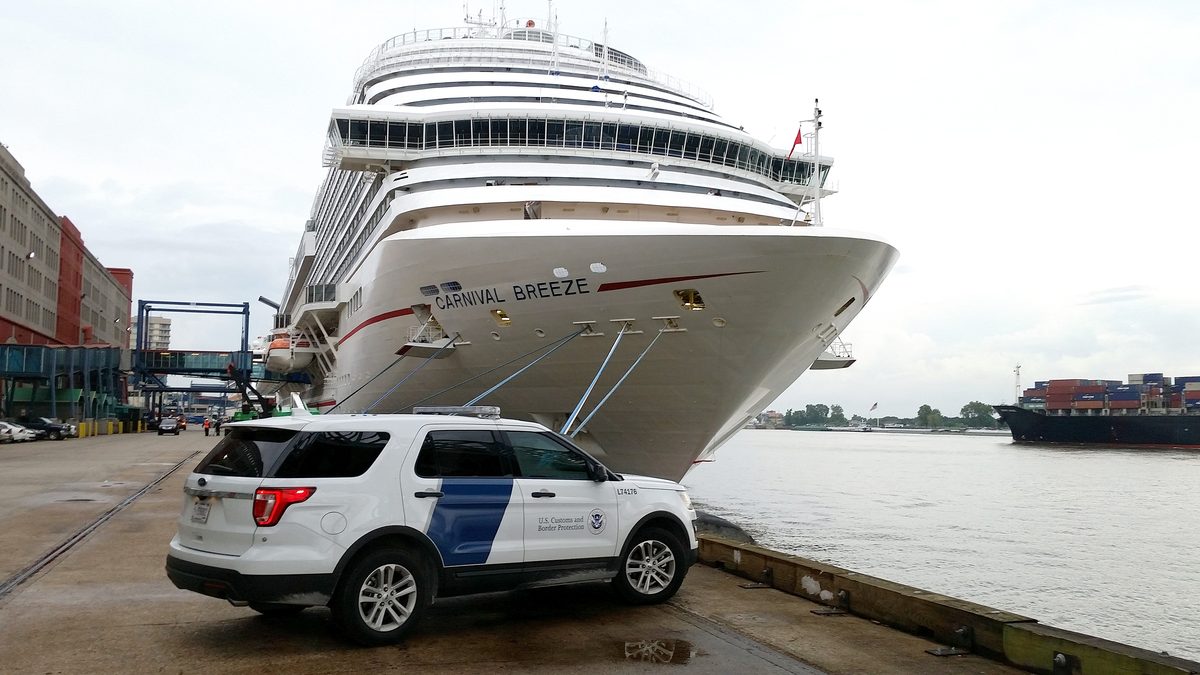
The Port
The Port of New Orleans (Port NOLA), the riverfront terminal at the foot of Julia Street and Henderson Avenue in the CBD/Warehouse District, hosts roughly 1 million cruise passengers annually. Major cruise operators sailing from Port NOLA include:
- Carnival Cruise Line (Carnival Glory, Valor, others)
- Norwegian Cruise Line (Norwegian Breakaway and others, seasonal)
- Royal Caribbean (smaller presence)
- Disney Cruise Line (limited seasonal sailings)
Itineraries are typically 4-, 5-, 7-day Caribbean — Cozumel, Roatán, Belize City, Costa Maya, Grand Cayman, Jamaica, Bahamas — plus occasional Mexican Riviera and Bahamas-shorter loops. Mardi Gras season produces a peak in cruise traffic that combines NOLA pre-cruise tourism with the cruise itself.
The Federal Jurisdiction Trap
Cruise ships operating from U.S. ports fall under concurrent federal jurisdiction:
- U.S. Coast Guard — maritime safety and security; criminal jurisdiction in U.S. waters and on U.S.-flagged or U.S.-departing vessels
- U.S. Customs and Border Protection (CBP) — at port of return, screens for prohibited items and prohibited substances
- Bureau of Alcohol, Tobacco, Firearms and Explosives (ATF) — secondary federal authority
- Federal Bureau of Investigation (FBI) — for felony-level crimes on cruises
Cannabis — a federal Schedule I controlled substance — is prohibited on cruise ships, period, regardless of:
- Where the passenger boarded (legal-rec state, medical state, or prohibition state)
- Where the ship sails (domestic-waters-only or international itinerary)
- Whether the passenger holds a state medical-cannabis card
- Whether the cruise itinerary includes only ports in cannabis-legal jurisdictions
Cruise Line Boarding Searches
All major cruise lines screen luggage and persons at boarding using X-ray machines, drug-detection dogs (selectively), and bag inspection. The detection rate for cannabis at boarding is materially higher than at TSA airport screening — cruise lines have stronger commercial incentives to detect (federal port access depends on it) and use detection technology specifically calibrated to drug presence.
Discoveries at boarding result in:
- Boarding denial. The passenger is refused boarding; ticket and onboard credits are typically forfeit.
- Referral to law enforcement. Discoveries are reported to U.S. Coast Guard or CBP, who may pursue federal charges.
- Lifetime ban from the cruise line. Major lines maintain shared databases of denied passengers.
For passengers who pre-boarded with cannabis and are discovered onboard during the voyage:
- Confiscation and confinement. Onboard security holds the passenger in cabin until next port.
- Removal at next U.S. port. The passenger is disembarked, often in handcuffs, and turned over to Coast Guard / CBP / local police.
- Criminal referral. Federal charges or state-law charges depending on which port and quantity.
- Cruise-line ban. Permanent.
The Caribbean Port Trap
Cruise itineraries typically include 1–4 Caribbean port stops. Cannabis legality varies by port:
- Jamaica — cannabis decriminalized for small quantities (Jamaican-resident permit system); tourists technically need a permit to legally possess.
- Bahamas — cannabis remains illegal; recent reform discussions but enforcement persists.
- Cayman Islands — strict cannabis prohibition; aggressive enforcement of tourists found in possession.
- Mexico (Cozumel, Costa Maya) — Supreme Court (SCJN) has held the absolute prohibition on personal-use cannabis unconstitutional, but federal regulatory framework is incomplete; tourists can be detained pending resolution. See our MexicoCannabis.org for the current legal posture.
- Belize, Honduras (Roatán) — strict prohibition; tourist-facing enforcement varies by encounter.
Even if you legally purchase cannabis at a Caribbean port (e.g., Jamaica with a tourist permit, where one exists), bringing it back onboard is a U.S. federal offense. Cruise security inspects returns from shore excursions. CBP at the eventual U.S. port of return inspects all passengers and luggage.
What About Medical Marijuana Cards?
State-issued medical-cannabis cards (Florida, California, Oklahoma, etc.) provide no protection on cruise ships. The Coast Guard, CBP, and cruise lines do not recognize state medical credentials for substances classified federally as Schedule I. Even Louisiana medical-cannabis patients who legally purchased product at H&W Drug Store or Sunflower cannot legally bring that product onto a cruise ship.
What About Hemp-Derived CBD?
Hemp-derived CBD products containing ≤0.3% THC are federally legal under the 2018 Farm Bill. Some cruise lines permit them; others prohibit them due to detection-confusion with full-spectrum products. Policies vary by cruise line and change without notice.
⚠️ Always verify current policy directly with the cruise line. Carnival, Norwegian, Royal Caribbean, and Disney each maintain separate policies; their FAQ pages are authoritative for the date of your sailing.
The Bigger Pattern: Federal Jurisdiction in Travel
Cruise ships are one of three travel modes where federal law overrides any state legalization regime:
- Commercial flight — TSA finds, refers to local police; some confiscation-and-release outcomes, some criminal referrals depending on jurisdiction.
- Federal-land national parks — Park Service has federal cannabis-enforcement authority even in legal-rec states.
- Cruise ships — Coast Guard / CBP federal jurisdiction with no state-law overlay.
For NOLA visitors planning to combine a Mardi Gras / Jazz Fest visit with a Caribbean cruise: do not travel with cannabis between the city and the ship. Use cannabis (where permitted) during the city portion only. Verify cruise-line CBD policy in writing before departure if you intend to bring CBD products.
If You Are Caught
Outcomes depend heavily on quantity, distribution-versus-personal-use packaging, and which federal officer or local jurisdiction processes the case. Personal-use quantities discovered at NOLA boarding most often result in confiscation and boarding denial rather than federal prosecution. Larger quantities, distribution-packaging evidence, or cannabis paired with another offense materially raise the prosecution probability.
Federal cannabis charges carry sentencing exposure under the U.S. Sentencing Guidelines that can be substantially more severe than equivalent state charges. Engage a federal-criminal-defense attorney experienced in maritime jurisdiction immediately if charged.
For in-depth cannabis education, dosing guides, safety information, and research summaries, visit our partner site TryCannabis.org
Related on this site: Bourbon Street, Essence Festival, French Quarter Fest.